
What Atlanta’s Teen Takeovers Teach Us and Why the Safe at Home Game Matters
Over the past several months, Atlanta has experienced what many are calling “teen takeovers.” These are large gatherings of youth organized through social media where hundreds of teenagers converge on public spaces like the Atlanta BeltLine or malls. In some cases, these gatherings have resulted in chaos, arrests, and the presence of illegal firearms. In a recent incident, Atlanta police arrested 17 individuals and confiscated 11 guns during a teen takeover event on the BeltLine.
Law enforcement leaders have promised to crack down on these gatherings, but the deeper question remains:
Why are teenagers organizing these events in the first place?
Because teenagers naturally organize.
They coordinate.
They communicate.
They move with purpose.
The real question is not whether youth will organize—they always will.
The question is what they are organizing for.
The Power of Organized Youth
When I was growing up in Atlanta, my life revolved around sports.
Practices.
Games.
Team meetings.
Expectations from coaches.
Those structures mattered more than people realize.
Sports gave me:
- A schedule
- Standards
- Accountability
- Relationships with adults who cared about my future
Because of those expectations, it was difficult to get into trouble. If I did something wrong, I risked not playing. And for me, playing mattered.
But here is the critical lesson:
Young people do not just need activities. They need organized purpose.
When youth lack structured, culturally relevant spaces to gather, compete, and build identity, they create their own excitement.
Sometimes that excitement becomes dangerous.
A Different Kind of Gathering: The Safe at Home Game
For more than a decade, Atlanta has hosted a very different kind of youth gathering.
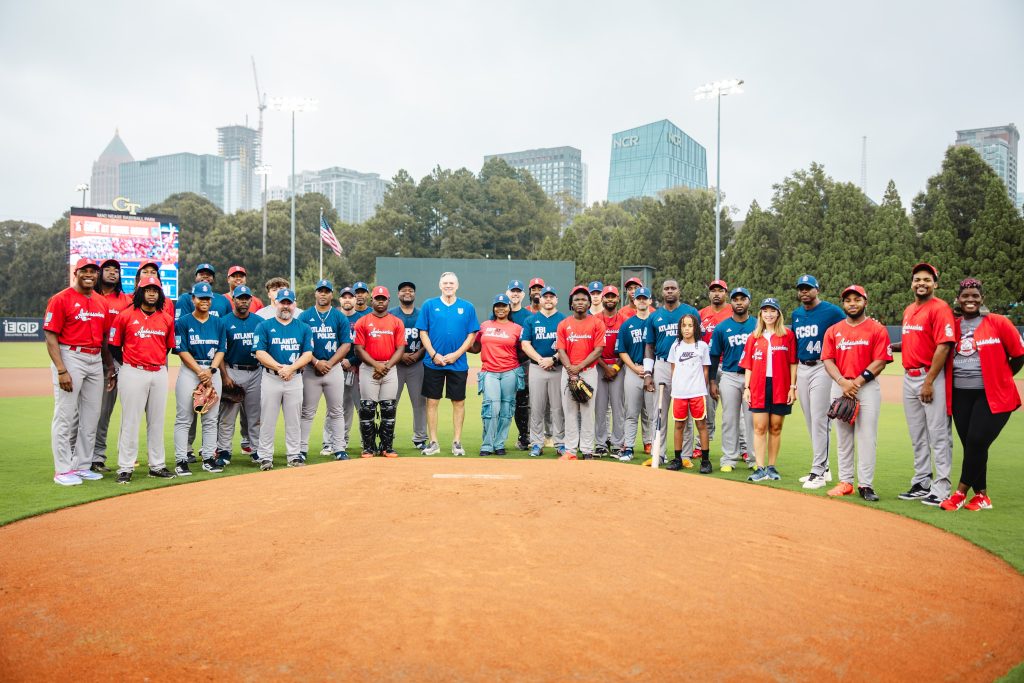
It is called the Safe at Home Game.
The Safe at Home Game is an annual self-officiated baseball game between L.E.A.D. Ambassadors and Atlanta law enforcement officers, including the Atlanta Police Department, Georgia Tech Police Department, Atlanta Public Schools Police Department, and the Fulton County Sheriff’s Office.
But this event is far more than a baseball game.
It is a platform for:
- Trust
- Competition
- Dialogue
- Relationship building
The game grew out of conversations about how to build authentic relationships between Black boys and law enforcement. Through sports, young men and police officers meet on the field as competitors and leave as community members who better understand each other.
Throughout the year, these relationships begin with our younger participants:
- Rookie League – elementary school boys
- Junior Ambassadors – middle school students
- LEAD Ambassadors – high school student leaders
- Ambassador Alumni – graduates of the program
These youth compete together in the Safe at Home Game, demonstrating leadership, discipline, and respect.
The impact is real.
Some LEAD Ambassador alumni have even gone on to pursue careers in law enforcement, inspired by relationships built through the program.
The Lesson Atlanta Must Learn
Teen takeovers reveal something important.
Young people are capable of incredible organization.
They coordinate transportation.
They communicate through networks.
They spread messages across social platforms in minutes.
That same energy—when redirected—can build leaders instead of headlines.
The difference is structure, mentorship, and funding.
Cities cannot simply ask youth to engage in positive activities if those activities are underfunded, poorly organized, or culturally disconnected from their realities.
If we do not invest in meaningful opportunities for teenagers, they will create their own.
Three Practical Ways to Engage Teens Before Problems Start
The solution is not just enforcement.
The solution is proactive engagement.
Here are three practical strategies cities, nonprofits, and schools can implement.
1. Fund Structured Environments With Real Standards
Teenagers need more than recreational programs. They need environments with clear expectations, leadership development, and accountability.
Programs should include:
Consistent schedules
Competitive opportunities
Mentorship from credible adults
Leadership responsibilities
Young people thrive when they are challenged and trusted.
Structure gives teenagers a place to put their ambition.
2. Build Authentic Relationships With Authority Figures
Many youth interactions with law enforcement occur during moments of crisis.
That is too late.
Programs like the Safe at Home Game intentionally create spaces where young people and police meet as competitors, teammates, and human beings, not adversaries.
When relationships exist before conflict, trust becomes possible.
And trust changes behavior.
3. Make Engagement Culturally Relevant and Future Focused
Teenagers are not interested in programs that feel forced or disconnected from their world.
Engagement must include:
Competition
Identity
Leadership opportunities
Connections to real careers and life paths
When young people see a clear connection between what they are doing today and who they can become tomorrow, their decisions change.
Purpose replaces boredom.
Vision replaces chaos.
From Takeovers to Transformation
Teen takeovers are not simply a policing issue.
They are a youth development issue.
The same organizational power that fuels chaotic gatherings can fuel leadership, entrepreneurship, and civic engagement.
The question is whether we invest early enough.
The Safe at Home Game demonstrates what happens when we do.
Young Black boys who might otherwise never interact with police in positive ways compete alongside them on a baseball field.
They lead.
They communicate.
They build relationships.
And sometimes, they grow up to serve the very communities they once played for.
That is the power of intentional youth development.
That is the difference between a takeover and transformation.
If you want to learn more about this initiative or support the effort to build stronger relationships between youth and law enforcement in Atlanta, visit:
Because when communities invest in young people early, the results extend far beyond the playing field.


